Life After the League: How Hannibal Navies Built a Legacy Beyond Football
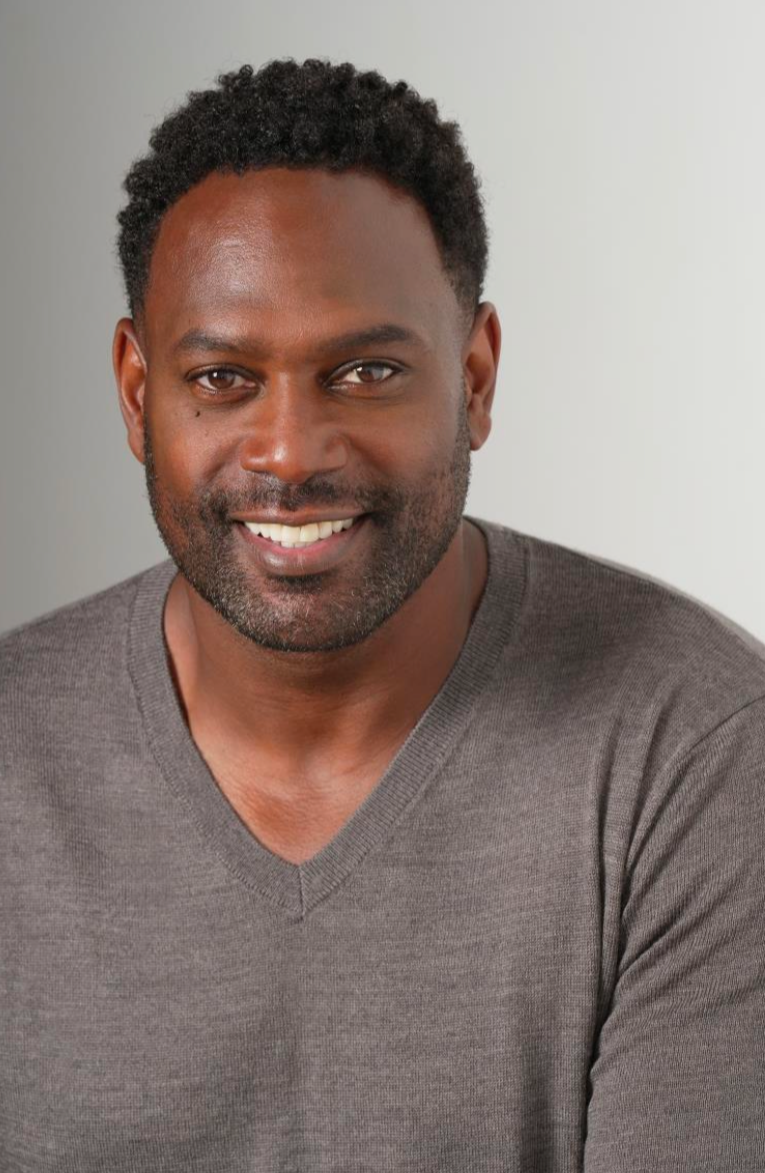
Hannibal Navies, former NFL linebacker and VP of Athlete’s Charitable. (Photo courtesy of Hannibal Navies)
After being picked up from school by his pastor, Hannibal Navies returned home to find his father in pain. Throughout the day, Navies watched as his father moved slowly through the house before settling into a chair, talking about the students he taught as firetrucks raced down the street outside.'
As hours passed, Navies stood quietly, trying to make sense of what was happening.
“All I could think about was losing my best friend,” Navies said. “I was confused, hurt and sad.”
By the time the morticians arrived to carry his father away, he still had not shed a tear.
Navies was dealing with a change in roles at the time, in addition to grieving the loss of his father. His lack of emotion was a reflection of the responsibilities he held at a young age rather than a lack of feeling. After his death, Navies started to absorb the principles he had been given.
That moment would shape how he approached everything that followed, not just striving for success, but a mindset that would follow him from Berkeley to Colorado, through the NFL, and into the work he does today.
The former NFL linebacker built a career in professional football that took him across multiple teams and cities. But long after his playing days ended, Navies found another purpose: helping young athletes prepare for life beyond the game.
For Navies, football was never meant to be the final destination. The lessons he learned growing up in Berkeley shaped a mindset that would later guide his work in philanthropy and athlete development.
That perspective began forming long before Navies ever stepped onto a football field.
Growing Up in the Bay Area
Navies was born on July 19, 1977, in Oakland. He was the youngest of four siblings. Raised in the Bay Area, Navies grew up in a household where community involvement was a way of life. Surrounded by a culture of service, Navies developed an early understanding of the importance of giving back.
His mother and father were deeply involved in local activism. They encouraged their children to work alongside them to support the community.
Navies’ father played a central role in activism in the Berkeley community.
Richard Navies taught African American studies at Berkeley High School. He was the founder of the Black Studies department at the school, which, at the time, was the only accredited African American history studies department in the United States.
His teachings would illustrate the diverse components of African American culture. Richard Navies taught many classes in his African American studies department, including Swahili, public speaking, black soul history, art, Afro-Haitian dance, black economics, and many more.
According to Berkeley High School’s assistant varsity coach, Chris McDavid, Richard Navies was referred to as a “Berkeley legend.”
“Hannibal’s last name, ‘Navies,’ means a lot in the Berkeley community,” McDavid mentioned. “When it comes to culture, African-American culture, making sure that you understand it, that you practice it, make sure that you not only lift yourself up, but also the community. That was the Navies brand and last name, long before football.”
Richard Navies would touch the hearts of thousands, and his legacy would spread outside of the Bay Area. His daughter, Kelly Navies, wrote a poem in his honor that is published in the National Museum of African American History & Culture. His legacy will forever be recognized by not only his Bay Area community, but the entire African American Community.
The published poem. https://nmaahc.si.edu/explore/stories/journey-back-to-you
When his father died while Navies was 13, the loss could have derailed him. Instead, it strengthened the lessons his father had already begun to teach. Navies’ mother, Isis Navies, said her son carried his father’s influence with him long after that day.
“He wanted to pay homage to his father by being the best of himself,” his mother said. “That’s been his trail, that’s been his consistency through life. Be the best he can be to his friends, to his family, and to his community.”
That commitment became more than a mindset, it became a standard. One that would guide how Navies approached football, relationships and eventually his work beyond the game.
This new philosophy carried into Navies’ personal relationships and identity. Those closest to him saw the same qualities his father embodied: loyalty, consistency and a commitment to others.
Rashidi Barnes, who grew up alongside Navies, shares how those traits have remained constant over time, shaping both their friendship and his role as a father.
“Hannibal is probably one of the most loyal people that I have grown up with,” Barnes said. “He took a lot of what his father instilled in him and instilled that in his kids.”
Something Navies also took from his father was his love for football. He was an immediate football prospect entering Berkeley High School in 1991. Even as Navies developed into a standout athlete, the values instilled by his father remained central to how he approached the game.
By his sophomore year, he was a starting cornerback demonstrating elite speed and agility.
Navies would play cornerback for the first two years on varsity until his senior year. In his senior season, the Yellowjackets were desperate for a linebacker. Navies recalls his initial reluctance to play linebacker.
"I was not open. I was not happy. I had been playing cornerback and receiver my whole high school career. My senior year, all of sudden they were like, ‘you are going to play linebacker.’ I was like what?”
Barnes, who played safety for the Yellowjackets, remembers how great of a linebacker Navies was.
“He did had God-given talent, speed, strength, size that others did not have,” Barnes noted. “But just like me, we approached the game, focused and with a goal in mind of dominating the person in front of us.”
Without realizing, linebacker would be Navies’ calling. He would be heavily recruited by multiple Division 1 schools for cornerback. In the end, he chose to attend the University of Colorado Boulder, one of the top programs in the country at the time.
A New Start at Colorado
From 1995-1998, Navies was a linebacker for the Colorado Buffaloes, one of the best college football teams of the time. After a successful 1994 season that featured an 11-1 record and Heisman Trophy winner Rashan Salaam, the Buffaloes had made a name for themselves.
Colorado continued to be one of the nation's most reliable programs while Navies was in Boulder. Under head coach Rick Neuheisel, the Buffaloes maintained a reputation when they moved into the newly established Big 12 Conference with a combined 33–14 record.
Navies was exposed to a nationally ranked program and elite competition, but his development at Colorado went well beyond football.
“I needed to get out of Oakland and change to be successful,” Navies said. “I went from an all-black city in Oakland to an all-white city in Boulder.”
The transition tested him, but it also reflected lessons his father had already begun to teach. The lessons his father had preached about, including navigating different cultures, understanding identity and building connections across communities, would guide Navies in his new environment.
He came to understand that the world extended far beyond where he grew up, a realization that would shape his future. At Colorado, where Black students made up a small percentage of the campus, Navies found himself navigating being the minority. While he had grown up in a diverse area, the experience challenged his understanding of what diversity truly meant.
Within the football program, Navies began to recognize differences he had not previously considered. Black teammates came from different regions of the country, each bringing their own backgrounds, experiences and perspectives.
Navies said he came to understand that there was not one singular experience, even among people who looked like him. Players from different parts of the country carried different identities, shaped by where and how they grew up.
Over time, the lack of representation became one of the most valuable lessons of his college experience. Navies learned how to communicate, connect and build relationships across different cultures, a skill that would later become essential in his professional career.
Looking back, Navies credits his time at Colorado as a defining period in his life.
“Now, being a VP and CEO of companies, directors, and being in corporate America, that’s because I had to evolve through the tracks of Colorado,” he said.
That ability to adapt and connect across different environments would later define not just his professional career, but his work in leadership and philanthropy.
Leveling Up to the NFL
Navies entered the NFL in 1999, selected by the Carolina Panthers in the fourth round as the 100th overall pick. For many players, reaching the league represents the realization of a lifelong dream. For Navies, it marked the beginning of a new kind of challenge.
“The NFL is a business,” Navies said. “You got meetings in the morning. You got to be on time, you got to dress a certain way. You physically have to be disciplined with your body, what you eat, how you work out. Are you studying? Are you watching film? It’s legit a job.”
The structure and discipline of the league mirrored the expectations Navies had grown up with. His father instilled in him the values of accountability, discipline and consistency, which shaped his attitude in the NFL.
Making the leap from college to professional football wasn't easy. Early in his career with Carolina, Navies faced harsh realities adjusting to the demands of the league. The uncertainty that comes with professional sports, where jobs are never guaranteed, quickly became apparent.
“Carolina was tough,” Navies admitted. “You don’t know if people are going to believe in you or if they’re going to get rid of you. That’s the business side of it.”
Complicating matters was Navies’ connection to former teammate Rae Carruth. Carruth was a fellow Colorado player and Carolina Panthers wide receiver who became a defendant in a high-profile murder case in 1999. Carruth was convicted of the killing of his pregnant girlfriend, Cherica Adams, a case that drew national attention.
Because of his relationship with Carruth, Navies was called to testify during the trial. His involvement in the trial only made playing in the league even more difficult.
“That was one of the hardest things I had to get through while I was playing,” Navies said. “I was a first- or second-year player still trying to figure out the league, and I had to deal with something that had nothing to do with me.”
The experience tested Navies beyond football, forcing him to navigate adversity and responsibility at a young stage in his career, challenges that echoed the resilience he developed after losing his father.
Despite the early challenges, Navies carved out a decade-long professional career. After four seasons with Carolina, he went on to play two years with the Green Bay Packers, followed by stints with the Cincinnati Bengals and the San Francisco 49ers, before retiring in 2008.
It was during his time in Green Bay that Navies began to think more seriously about his impact beyond football. In 2003, he founded the Hannibal Navies Foundation, an effort rooted in the values instilled in him long before he reached the NFL.
The Hannibal Navies Foundation began as a series of youth football camps run by Navies and his closest friends, including Barnes. Over time, it evolved into a program focused on developing young athletes not only on the field, but in their education, personal growth and life beyond sports.
Life After the League
When Navies retired from the NFL in 2008, football was no longer the center of his life, but the platform it provided had only just begun to take shape.
Years earlier, while still playing, Navies laid the foundation for what would become his life’s work. In 2003, he launched the Hannibal Navies Foundation, starting with youth football camps in the Bay Area, the same communities that shaped him.The foundation was not just an extension of his career, but a continuation of his father’s work, centered on education, community and opportunity.
“I just wanted to start giving back,” Navies said. “I didn’t know exactly what it would become. I just knew I wanted to do something.”
At first, the camps were simple drills, mentorship, and access. But what Navies began to notice was what happened after the camps ended. Kids stayed behind, asking questions. Parents wanted guidance. Coaches wanted resources.
The need went beyond football.
“I wanted to do more than just football camps,” Navies vocalized. “I want to educate. So many people would come up to me and ask, ‘How can I talk to you more?’ ‘What’s the next steps?’ ‘How do I reach out to coaches?’”
That realization led to the creation of 360 Sports Academy, a program built to extend that impact year-round. What began as a camp evolved into a structured system designed to develop athletes not just on the field, but off the field as well.
At 360 Sports Academy, the focus extends beyond the field. Athletes are introduced to financial literacy, mental health awareness, college readiness and personal branding. The goal is not just performance, but preparation, equipping young athletes with the tools to navigate life whether or not sports remain part of it.
The model reflects the same principles Navies grew up around, that success is not just about opportunity, but about preparation and responsibility to others.
These camps bring together professional athletes, coaches, and mentors to work directly with players, blending high-intensity training with life education. Former NFL players such as Ray Lewis have participated, reinforcing the message that success is about more than what happens on the field.
For Barnes, who has watched that journey from the beginning and was involved in early camps, the impact is clear.
“His dedication to former NFL players, the youth and kids who aspire to reach the heights that he has reached is inspirational,” Barnes said. “He’s spent decades trying to provide them with as many tools as he can to be successful.”
One of 360 Sport Academy's largest camps was held at Georgia Tech back in 2013. The response was outstanding. This camp demonstrated the influence Navies and his colleagues have on kids can be greatly increased by incorporating a curriculum-based component into football training.
This recorded video of the camp illustrates 360 Sports Academy's objectives. https://vimeo.com/60058804?fl=tl&fe=ec
While 360 Sports Academy focuses on direct development, Navies’ work expanded further through Athletes Charitable, where his impact reaches beyond his own programs.
Athletes Charitable operates as both a support system and infrastructure for professional athletes looking to give back. Through the organization, athletes are guided through the process of launching and managing their own foundations. Everything from programming and long-term planning to legal setup and compliance is taught to each client.
The network includes athletes across professional sports, such as AJ Brown, AJ Terrell, Alexis Belton and De'Anthony Melton. Each client is building initiatives rooted in the communities they care about.
Rather than navigating philanthropy alone, athletes are given the structure to turn intention into sustained impact.
“We are able to help athletes provide an avenue to leave a legacy off of the field,” Alyssa Bailey said, director of operations at Athletes Charitable. “It’s about supporting them so they can focus on what they care about, giving back to their communities.”
The Hannibal Navies Foundation established the foundation, 360 Sports Academy constructed a direct development method, and Athletes Charitable expanded it so that more athletes can do the same.
In many ways, Navies is now providing structure, direction and a way ahead for other athletes, just as his father did for his community. His mission reflects lessons shaped throughout his life, but also rooted in what he learned early: that success is not built alone.
Navies has taken on the role of his father, teaching his own children the same virtues of self-discipline, purpose, and service.
His son, Hannibal Carter Navies II, a recent defensive back at the University of Arizona, is beginning to build his own foundation, using modern NIL opportunities to center his brand around service.
“So his foundation is really around supporting the communities where he plays,” Navies said. “Wherever he is, he wants to consistently give back.”
Nylah Navies, his daughter, is carrying on her father's legacy alongside his son. Nylah Navies shares that Navies' commitment to service has already shaped her own decisions.
“I actually just joined Delta Sigma Theta Sorority, Incorporated,” she said. “Service is something that’s really big to him, and it’s really big in the organization I just joined. He definitely had a big influence on me to even do that.”
Football has never been the only factor in the Navies' journey, from Oakland to the NFL and beyond. It has been shaped by a foundation based on community, accountability and service that was established even before his playing career started.
The same lessons his father once taught in a Berkeley classroom now live on through Navies’ work, carried forward not only in the athletes he mentors, but in his own children.
In the end, his legacy is not just what he built, but what he continues to pass on.