Breaking Boundaries: The Rise and Impact of Women’s College Sports
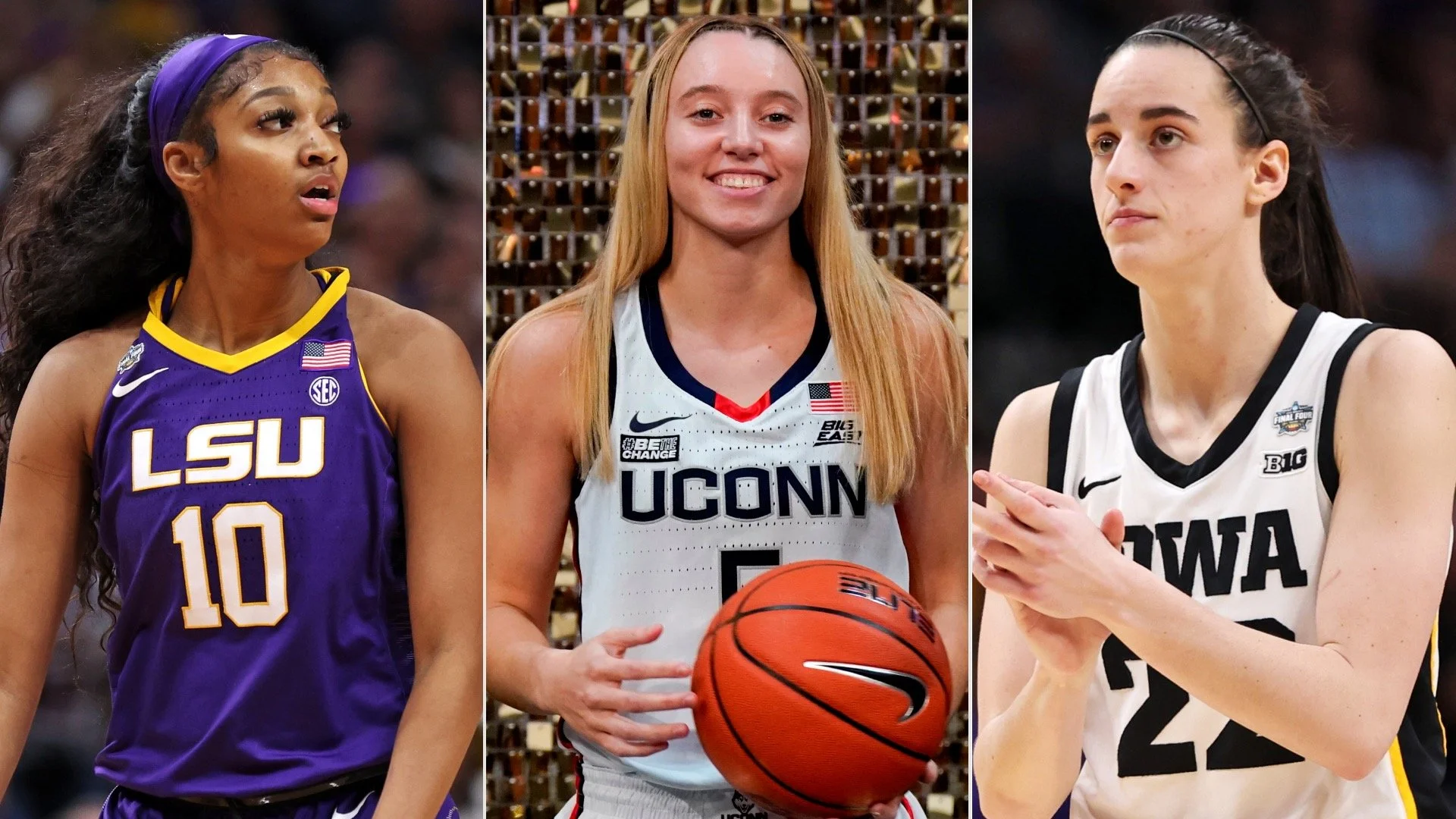
Image by Sporting News
By: Lexi Cantrell
Nov. 9, 2024
The Championship game for Women’s March Madness between Iowa and South Carolina drew in more viewership than the Dodgers’ Championship game with the Yankees.
According to ESPN, the women’s basketball game attracted an average of 18.9 million viewers, peaking at 24.1 million, making it the most-watched women's college basketball game ever. In contrast, Yahoo Sports reported Game 1 of the 2024 World Series between the Los Angeles Dodgers and New York Yankees averaged 15.2 million viewers, peaking at 17.8 million.
This was the first time a women's championship game has surpassed the opening game of the World Series in viewership, highlighting the growing popularity of women's sports.
Women's collegiate athletics is becoming a powerful force. These female athletes, such as Caitlyn Clark, Angel Reese, Livy Dunn, and Paige Bueckers, are rising to fame outside of the realm of university athletics.
The primary forces behind the increasing popularity of women's collegiate athletics are NIL, social media, and fan engagement.
The acronym NIL, which stands for "name, image, and likeness," allows collegiate players to be compensated through endorsements and other ventures at market value. Athletes control having their name, image, or likeness used for profit with their permission.
Solly Fulp, who is the Executive Vice President for NIL Growth and Development at Learfield, speaks about how there are two major aspects to NIL.
“There are two definitions for NIL. First is the pay-for-play aspect, which is primarily driven by collectives. They essentially recruit student athletes and pay the athletes to attend the university.” He adds, “The second definitionis the influencing marketing side, where student athletes are being connected to brands for content.”
Under NIL, student athletes are either compensated directly by the university to play for the school or used to produce content and paid according to their market value. NIL has been beneficial to women, particularly in the areas of marketing and influence.
One of the most famous gymnasts, Livy Dunn, gained notoriety through NIL. Dunn had the opportunity to collaborate with other well-known brands through NIL, including American Eagle, Body Armor, and Vuori. She produced marketing campaigns and advertisements for each business, bringing in millions of dollars.
Fans of women's collegiate athletics have increased significantly because of social media and NIL. Women's collegiate athletics can reach a wide range of platforms and media consumers thanks to social media's strength.
Paciolan is a technology company that powers primary ticketing, fundraising, marketing, and data aggregation primarily in College Athletics. The company's president, Deana Barnes, discusses how the shift in women's collegiate athletics was brought about by social media and NIL.
“I think social media and NIL has put a spotlight on women athletes and because of the attention, fans are now starting to follow those athletes and then connecting to the sport or team itself. Livy Dunne, for example, is the second-highest paid NIL athlete in Division 1 athletics and because of all of the focus on her, LSU gymnastics is in high demand.”
It is impossible to overlook what these female collegiate athletes have accomplished. These new celebrities have amassed millions upon millions of fans thanks to social media and NIL. Among the collegiate athletes with millions of Instagram followers are Livy Dunn with 5.3 million followers, Paige Bueckers with 2 million followers, and the Cavinder Twins, who have a combined 1.79 million followers.
Barnes also touches on how Paciolan saw an increase in ticket sales because of these factors.
“There has absolutely been a rising demand and affinity to women's sports. At Paciolan, our college clients in the power four conferences saw a 28% growth in attendance for all of women's sports last year. And specifically, to women's basketball, season tickets increased 32% over 2023 and single ticket sales doubled.”
The economics of collegiate athletics have changed as women's athletics continue to expand. Women's collegiate athletics revenue is rising in sync with Paciolan's ticket sales.
“The Women's Division 1 basketball championship brought in $600 million in 2023. The figure is expected to rise due to the $920 million broadcast deal that ESPN signed in 2024 for the rights over the next eight-year,” according to the NCAA.
The Sports Conflict Institute claims that sports have a bigger impact on the American economy than most people realize.
“The sports industry accounts for roughly $14.3 billion in direct earnings each year, with an average salary of $39,000 per job [of around 456,000 jobs].”
We can only anticipate a rise in the sports industry's earnings given the sustained appeal of women's collegiate athletics.
Sara Elcano, Oregan State University's Deputy Athletic Director for External and Advancement, discusses how she believes fan engagement revenue drives advances in women's college athletics.
“There has to be a financial upside for those owning teams, building stadiums, sponsoring individuals/teams/leagues and the media covering it all. The scales tipped when a real proof of concept, that women’s sports can generate enough attention to be profitable, became real.”
In addition to the fan interaction, Elcano discusses how significant occasions in women's athletics contributed to making women collegiate athletes more well-known.
“I remember the 99ers of USA women’s soccer filling a stadium and then capturing that win via penalties. A better question is who doesn’t remember that?” She adds, “I believe it set the necessary foundation, and lessons were learned that paved the way for the success collegiate and professional women’s sports are seeing now.”
These memorable moments in women's sports are more likely to remain relevant for extended periods of time in the current digital era. Social media usage by fans enables women to become celebrities not just in their sport but also nationally and internationally.
Upcoming UCLA softball star Kaniya Bragg shares her thoughts on how social media and NIL have impacted her as an athlete.
“Women have been able to advocate for themselves more because of social media and the platforms given to them by their following and supporters.” Bragg adds on, “I’ve appreciated having the ability to create my brand and to be able to share it with the world. Money aside, I love sharing what I care about and building my brand through companies and brands that I support.”
Through NIL and social media, Bragg can promote her merchandise and any brand partnership through her personal social media profiles. Bragg will collaborate with companies she supports and use marketing campaigns to tell her narrative.
It appears that women's collegiate athletics will continue to gain popularity, considering all these recent advancements. However, as great as these new developments seem, there are also consequences to implementing huge changes in college athletics.
College athletics may undergo significant change because of the current House v. NCAA settlement. The agreement, if it is approved, would provide $2.78 billion in retroactive damages payments for former collegiate athletes who were not given the chance to get compensation for their NIL as early as 2016.
Additionally, it would provide college athletic departments with the option to directly share earnings with both present and future players, with a starting point of $20 million per school each year.
Since the funds from this new agreement will go directly to the sports that receive the greatest funding and attention, this means trouble for collegiate women's athletic programs. Men's basketball and football are the sports that will receive most of the NIL money. Women's programs would start to be cut or changed to club programs.
Sara Elcano worries about the future of women’s college sports because of the House settlement.
“At this important crossroads in collegiate athletics, the challenge in front of us is how to continue investing in those programs at the level we have been, while also being well-aware that football is the major driver of media rights deals and the funds yielded from those agreements comprise a large portion of a department’s overall budget.”
Elcano continues, “For the time being, a lot is speculative, and until we have more data post-realignment and post-NCAA vs House implementation, no one can know for sure how much of impact this moment in time will have long term. I believe the key is to monitor that data and view everything as an opportunity – not looking back but rather asking what’s next?”
Without a doubt, NIL, social media, and fan interaction have contributed to the explosive growth of women's collegiate athletics. Student athletes' dynamics are constantly evolving. Past student athletes would choose the university to attend to get a degree, build their character, and because of their passion in that university. Now, it’s all about which university can pay the most and where the student can grow their brand the most.
It's fascinating to see where student athletes, particularly women, will go with all these new developments in collegiate athletics.